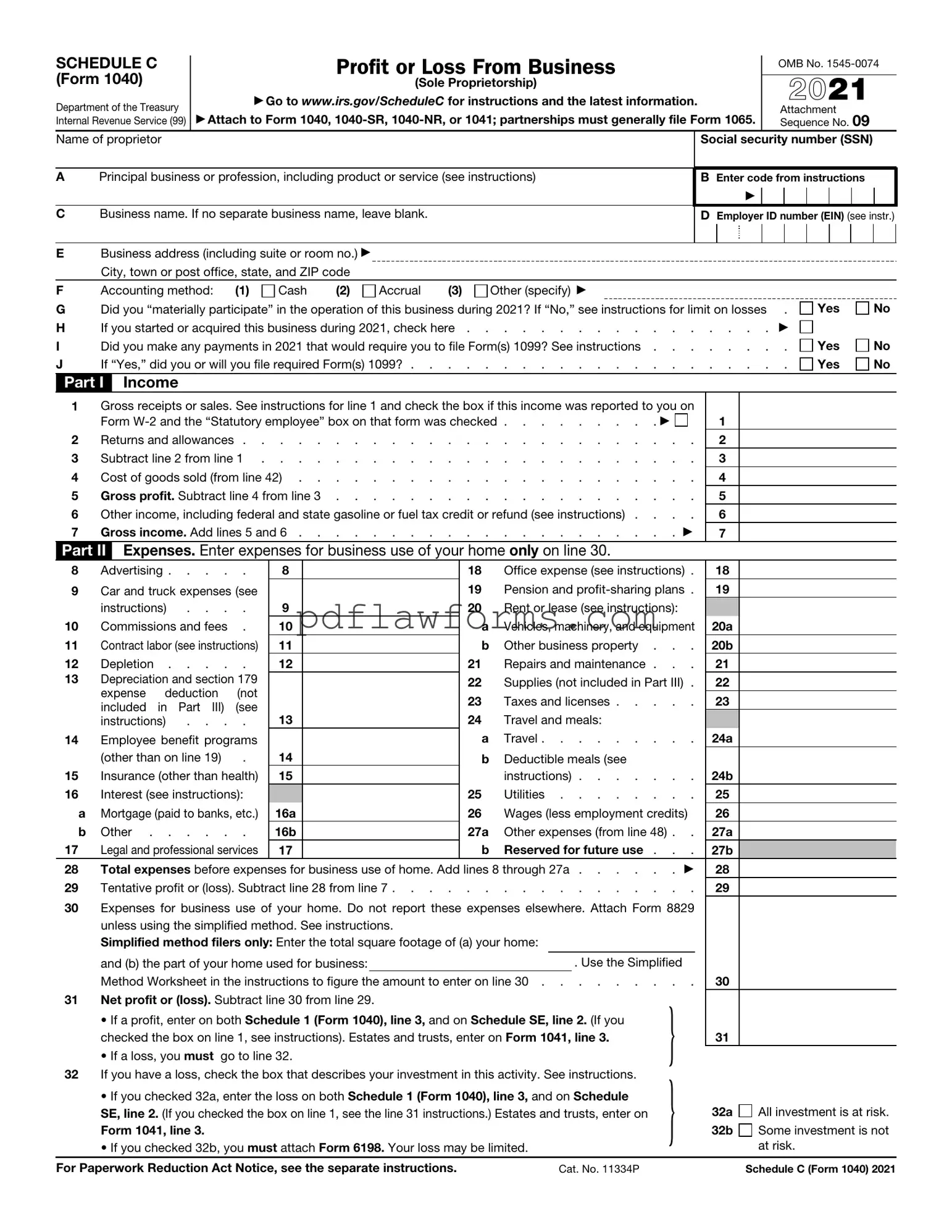
Fill Your IRS Schedule C 1040 Template
Fill Your IRS Schedule C 1040 Template
The IRS Schedule C (Form 1040) serves as a crucial document for self-employed individuals and small business owners in the United States. It provides a structured way to report income or loss from a sole proprietorship, allowing taxpayers to detail their earnings and expenses. This form is not only essential for calculating net profit but also plays a significant role in determining tax obligations. By including various sections, it prompts users to disclose different types of income, such as sales revenue or services rendered, while also allowing for deductions related to business expenses like supplies, travel, and home office costs. Understanding how to accurately fill out Schedule C can help maximize deductions and minimize tax liabilities, making it a vital tool for effective financial management. Additionally, the form includes specific guidelines for reporting vehicle expenses and other relevant details that can impact overall tax calculations. Navigating this form effectively can lead to substantial savings, highlighting its importance in the realm of self-employment taxation.
Understanding IRS Schedule C can be confusing. Here are six common misconceptions about this form that many people have:
Being informed can help you navigate the tax process more effectively. Understanding these misconceptions is a step in the right direction.
Filling out the IRS Schedule C (Form 1040) can be a daunting task for many small business owners and self-employed individuals. One common mistake is failing to report all income. It’s essential to include every source of income related to your business. Even if you think a small amount is negligible, the IRS expects complete transparency. Missing even a single dollar can raise red flags and lead to complications down the line.
Another frequent error involves misclassifying expenses. The IRS has specific categories for business expenses, and placing an expense in the wrong category can lead to inaccuracies in your tax return. For instance, mixing personal expenses with business expenses is a serious mistake. It's crucial to keep personal and business finances separate to ensure that only legitimate business expenses are deducted.
Many individuals also overlook the importance of keeping accurate records. The IRS requires that you maintain documentation for all income and expenses claimed on your Schedule C. Without proper records, you may struggle to justify your deductions if the IRS questions your return. Receipts, invoices, and bank statements are vital to support your claims. Neglecting this can result in denied deductions or even audits.
Another common pitfall is failing to account for self-employment taxes. When filling out Schedule C, it's easy to focus solely on income and expenses without considering the self-employment tax implications. This tax is calculated based on your net earnings from self-employment and can significantly impact your overall tax liability. Understanding how this tax works and planning for it can help avoid unexpected financial burdens.
Lastly, many people forget to sign and date their forms. It might seem trivial, but an unsigned form is considered incomplete and can lead to delays in processing your return. Always double-check that you’ve signed and dated your Schedule C before submitting it to the IRS. Taking a moment to ensure all details are correct can save you from headaches later.
Filling out the IRS Schedule C (Form 1040) is an important step for self-employed individuals or sole proprietors to report income and expenses from their business. The information collected will help determine your net profit or loss for the year. Below are the steps to guide you through the process of completing this form accurately.
After completing the Schedule C, ensure that you keep a copy for your records. This form will be submitted along with your Form 1040 when filing your taxes. Accurate reporting is essential to avoid potential issues with the IRS.
Generic Direct Deposit Form - List the name of your financial institution accurately.
For those looking to create a clear and legally binding agreement, obtaining a Texas RV Bill of Sale is essential, and you can find a useful template at My PDF Forms. This document not only outlines the transfer of ownership but also protects the interests of both the buyer and seller by detailing crucial information regarding the vehicle and the transaction.
How to Set Up Direct Deposit - Complete the required fields to set up direct deposit with ease.
Free Printable D1 Form - Falsifying information on your application can lead to serious fines and legal issues.